




In today’s fast-paced digital landscape, businesses can no longer afford to rely only on traditional web design, basic SEO tactics, and generic branding. Artificial Intelligence (AI) is reshaping every facet of online presence—from how websites are built to how content is optimized and brands connect with customers. As we move deeper into 2025, embracing AI-powered solutions is no longer optional; it’s essential for staying competitive. This comprehensive guide explores using AI web design, AI SEO tools, AI-driven digital content, and AI logo + brand design—showing you exactly how to harness these innovations to boost traffic, enhance user experience, and skyrocket conversions.
Over the last decade, AI has transitioned from a buzzword to a business imperative. In 2025, AI-driven web design, AI SEO tools, AI content creation, and AI brand design have reached maturity—with advanced algorithms, machine learning models, and neural networks enabling unprecedented automation and intelligence.
 Consumer Expectations: Today’s
consumers expect fast-loading websites, hyper-personalized experiences, and instantly
accessible information. AI fulfills these needs by analyzing vast data sets in real time
and delivering optimized interfaces and content.
Google’s Evolving Algorithm:
Google’s core ranking updates now heavily factor in user engagement metrics—like dwell
time, click-through rate (CTR), and bounce rate—many of which correlate directly to
AI-optimized experiences. Leveraging AI SEO tools ensures you stay ahead of ranking
shifts.
Competitive Advantage: Early
adopters of AI see up to 70% faster time-to-market for new features, 30% more efficient
content production, and double-digit increases in conversion rates.
Consumer Expectations: Today’s
consumers expect fast-loading websites, hyper-personalized experiences, and instantly
accessible information. AI fulfills these needs by analyzing vast data sets in real time
and delivering optimized interfaces and content.
Google’s Evolving Algorithm:
Google’s core ranking updates now heavily factor in user engagement metrics—like dwell
time, click-through rate (CTR), and bounce rate—many of which correlate directly to
AI-optimized experiences. Leveraging AI SEO tools ensures you stay ahead of ranking
shifts.
Competitive Advantage: Early
adopters of AI see up to 70% faster time-to-market for new features, 30% more efficient
content production, and double-digit increases in conversion rates.
By understanding how AI integrates into every stage of digital strategy, you can secure top search rankings, maximize ROI, and build an online presence that resonates in a crowded marketplace.
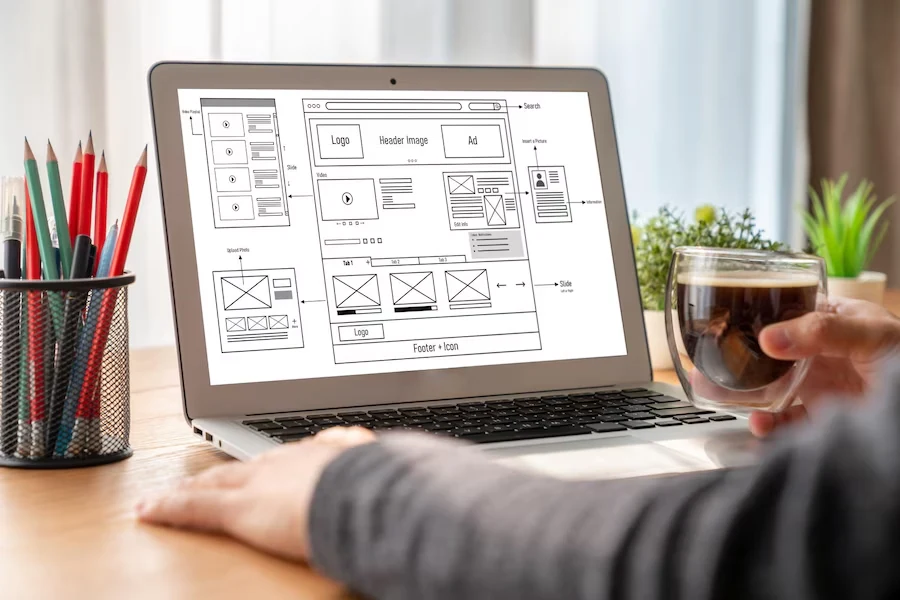
Traditional web design often involves manual wireframing, prototyping, coding, and user testing—processes that can drag on for weeks. AI web design in 2025 slashes development time while producing higher-quality, more user-centric interfaces.
2.1 AI-Powered Layout & Wireframing:
Automatic Layout Generation: Tools
like Framer AI and Firedrop’s Sacha (Sacha.ai) use computer vision and deep learning to
analyze user preferences, site objectives, and industry benchmarks, then propose optimal
layouts within seconds.
Heatmap Prediction: AI models predict where users will click, scroll, and hover—allowing
you to place hero CTAs, navigation menus, and conversion elements in high-attention
zones. This data-driven design approach reduces guesswork and increases user engagement.
Faster Prototyping: By feeding in a brand’s color palette, typography guidelines, and
content hierarchy, AI-driven wireframing tools can generate pixel-perfect prototypes in
minutes—ready for stakeholder review and iteration.
2.2 Adaptive User Interfaces & Personalization:
Behavioral Personalization: Modern
AI can track individual user journeys—through cookies, session data, and previous
purchase history—then dynamically rearrange site elements, product recommendations, and
content to suit each visitor’s intent.
Multivariate Testing at Scale:
Instead of manually testing A/B variations, AI platforms
run hundreds of micro-tests simultaneously, evaluating button colors, headline copy, and
layout shifts in real time. The winning combination automatically rolls out to 100% of
traffic once statistical significance is achieved.
Voice & Gesture Interfaces: With
widespread adoption of smart speakers and mobile voice
search, AI-driven voice UI frameworks (Dialogflow, Rasa, Azure Bot Service) enable
websites to accept voice commands, improving accessibility and giving brands a
futuristic edge.
2.3 Automated Code Generation & Testing:
AI-Assisted Coding (Copilot, Github
Copilot X): These tools analyze your project requirements, existing codebase, and
best-practice libraries, then auto-suggest entire functions or UI components. Developers
can accept, tweak, or reject suggestions—reducing development time by up to 40%.Continuous AI-Powered QA: Automated
testing suites (e.g., Testim.io, Functionize) employ
machine learning to detect UI anomalies, cross-browser compatibility issues, and
potential security vulnerabilities—flagging them instantly. This “shift-left” approach
means fewer post-launch bugs and lower maintenance costs.
SEO-Friendly Markup Generation:
When you add new pages or content, AI-driven site
crawlers automatically generate schema markup (JSON-LD), meta descriptions, and alt
text—ensuring every page is fully optimized from day one.
In 2025, SEO is no longer about manually stuffing keywords and building links one at a time. AI SEO tools leverage machine learning to reveal hidden opportunities, optimize content at scale, and predict ranking fluctuations before they happen.
3.1 Machine Learning Keyword Research:
Semantic Keyword Clustering: Tools
like MarketMuse, Surfer SEO, and Ahrefs (with AI-powered Keyword Explorer) group
thousands of keyword variants into semantic clusters, allowing you to target broader
topic areas (e.g., “AI web design best practices” + “AI-driven UI/UX tips”) rather than
individual long-tail phrases.
Voice Search Optimization: By analyzing conversational queries from Google Assistant,
Siri, and Alexa, AI models identify voice-friendly keywords (“how to use AI in web
design” vs. “AI web design tools 2025”). Incorporating these natural-language phrases
boosts visibility in featured snippets and voice search results.
Predictive Keyword Difficulty Scoring: Instead of relying on static keyword difficulty
metrics, AI tools now forecast how competitive a keyword will be in the coming 3–6
months—considering competitor content velocity, domain authority trends, and seasonal
search patterns. This lets you target “rising” keywords before they become saturated.
3.2 AI Content Optimization & On-Page SEO:
Real-Time Content Recommendations:
As you draft a blog post or landing page, AI plugins (e.g., Surfer SEO, Clearscope)
analyze top-ranking pages for your target keyword and suggest optimal word count,
heading structure, related semantic terms, and internal link opportunities—all in real
time.
Automated Meta Tags & Schema Markup: AI crawlers generate dynamic meta titles and
descriptions based on user intent signals and CTR data, then automatically insert
structured data (FAQ schema, HowTo schema) to increase the chances of rich results.
Sentiment & Readability Analysis:
Tools like Grammarly Premium (with AI scoring) and
Acrolinx analyze your content’s tone, sentiment, and readability—ensuring it matches
target audience expectations (e.g., professional vs. casual). By improving dwell time
and reducing bounce rate, these optimizations indirectly boost SEO.
3.3 Predictive Analytics for Link Building & Rankings:
Automated Outreach & Link
Prospecting: AI platforms (BuzzStream with AI, Pitchbox) scan the web for relevant
domain opportunities based on topical relevance, domain authority, and link velocity
trends. They even generate personalized outreach emails, increasing response rates by up
to 30%.
Ranking Forecast Dashboards: Machine learning models ingest historical ranking data,
content updates, and competitor signals to predict ranking shifts on a weekly or monthly
basis—allowing you to preemptively adjust your strategy (e.g., refresh outdated content,
optimize underperforming landing pages).
Competitor Gap Analysis: AI tools automatically detect keyword gaps between your site
and top competitors, then recommend content briefs to close those gaps—complete with LSI
terms, internal link suggestions, and target word counts.





© Copyright 2025 - CraftiveCore. All Right Reserved

 01 June 2025
  Ashish Dasadiya
 +91 - 7428894211
 PAN
India
PAN
India contact@craftivecore.com
 10:00AM - 7:00PM(Mon - Fri)